Project 1. MODIS Cloud Regimes
Introduction to MODIS Cloud Regimes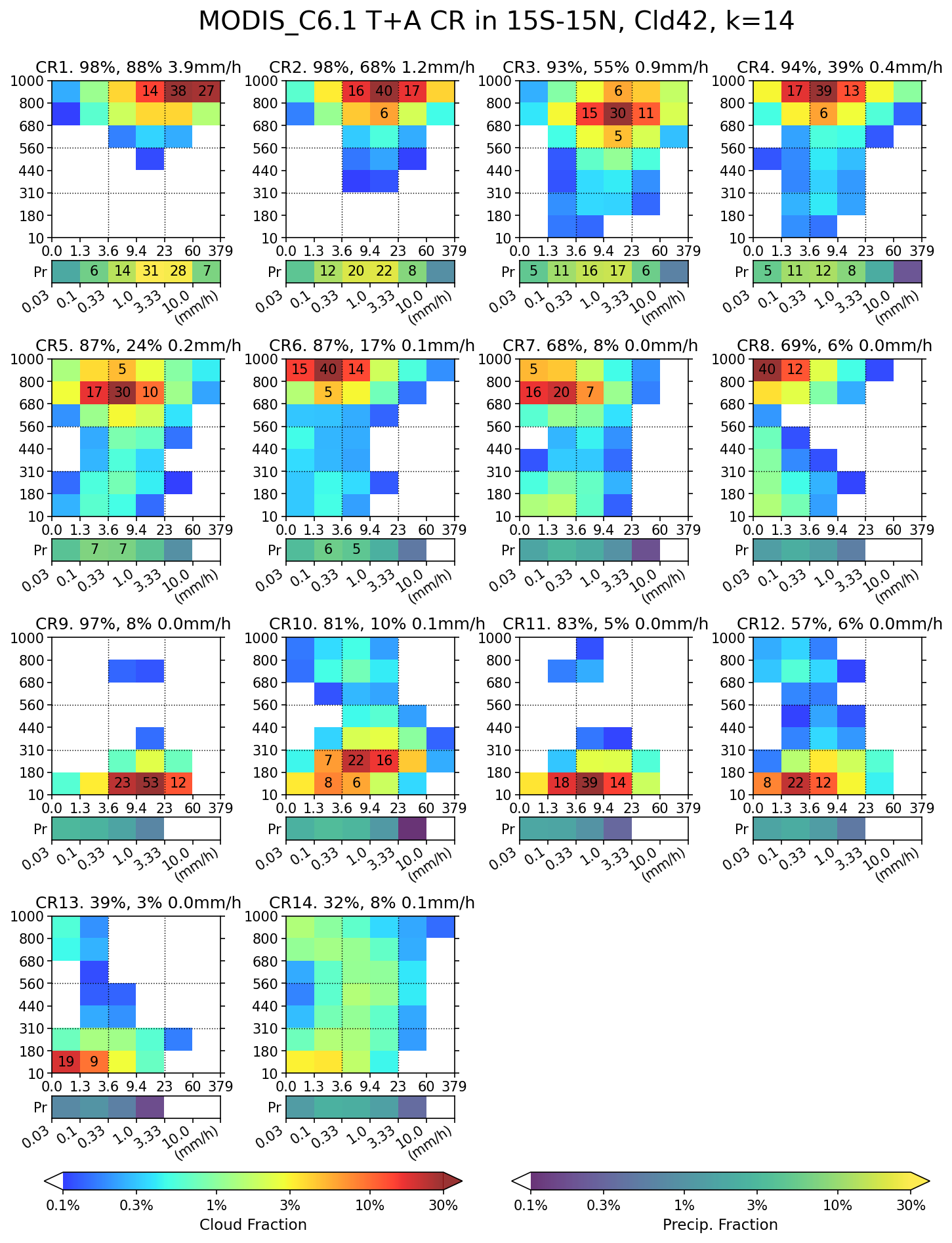

Introduction to MODIS Cloud Regimes
Introduction to Cloud-Precipitation hybrid Regimes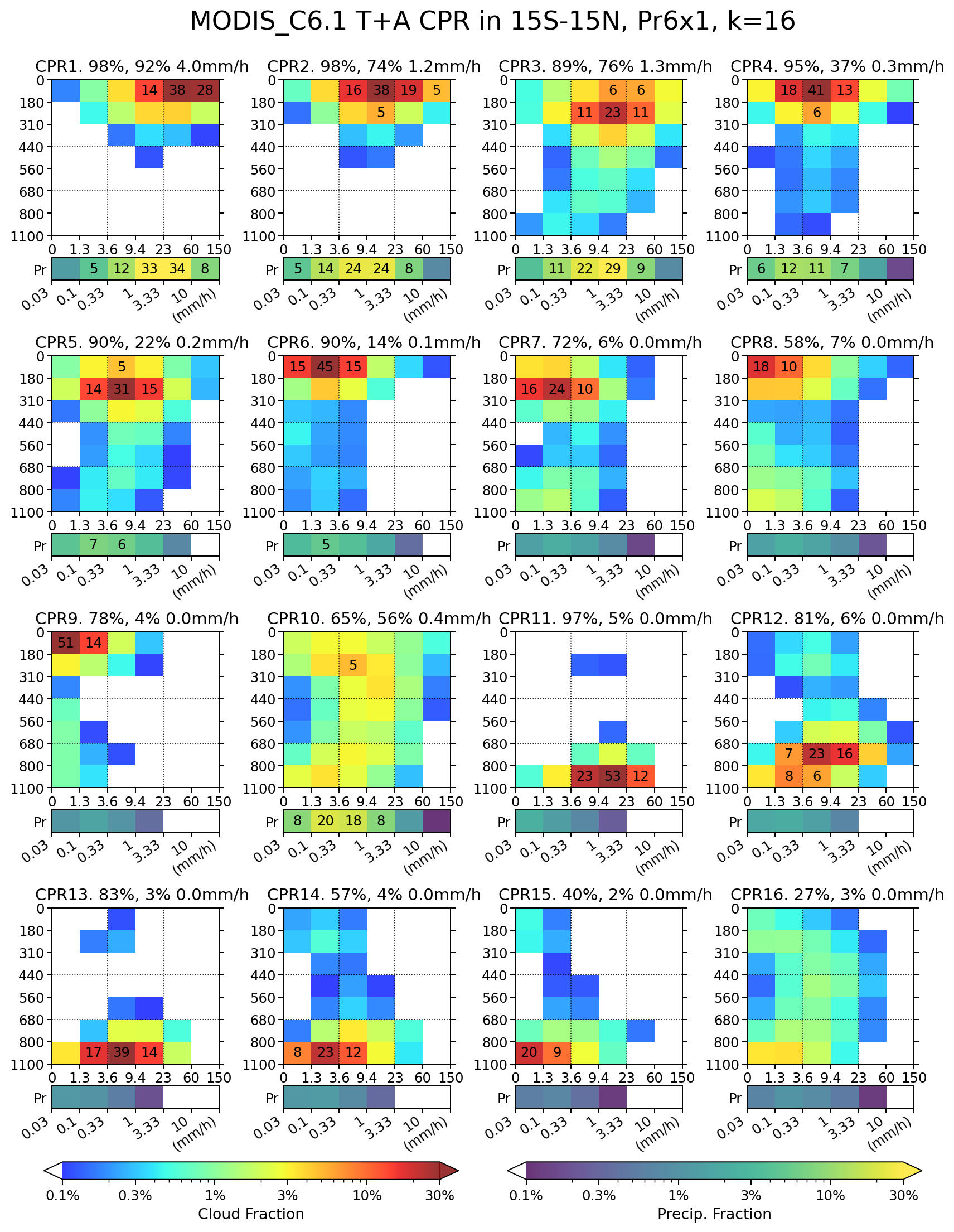
Short description of portfolio item 
Published in Journal 1, 2009
This paper is about the number 1. The number 2 is left for future work.
Recommended citation: Your Name, You. (2009). "Paper Title Number 1." Journal 1. 1(1).
Download Paper | Download Slides | Download Bibtex
Published in J. Geophys. Res. Atmos., 2009
Analysis of observational estimates indicates that the El Niño–Southern Oscillation (ENSO) forced pattern in the extratropical Southern Hemisphere (SH), somewhat surprisingly, leads the peak phase of ENSO by one season. A Rossby wave source (RWS) analysis indicates that the tropical and extratropical RWS in the SH develops before the ENSO peak season and abruptly weakens thereafter. Further analysis shows that anomalous divergence/convergence and corresponding irrotational wind anomalies are sensitive to local seasonality. Numerical experiments in which the tropical Pacific is prescribed with perfectly periodic ENSO while all other oceans are simulated as a slab mixed layer model coupled to AGCM also show similar features. Additional numerical experiments in which ENSO forcing is shifted by 6 months (i.e., the ENSO peak in the southern winter season) indicate that the Northern Hemisphere atmosphere rather than the SH atmosphere precedes ENSO. This result supports the hypothesis that the ENSO forced pattern in the extratropics is strongly limited by local seasonality, rather than by the temporal phase of tropical remote forcing.
Recommended citation: Daeho Jin, Ben Kirtman, "Why the Southern Hemisphere ENSO responses lead ENSO." J. Geophys. Res. Atmos., 2009.
Download Paper
Published in J. Geophys. Res. Atmos., 2010
The relationship between tropical remote forcing and seasonality in the extratropics is examined with a set of numerical experiments that use prescribed sea surface temperature (SST) in the tropical Pacific and a simple thermodynamic slab mixed‐layer model outside the prescribed region coupled to an atmospheric general circulation model. The numerical experiments use an idealized El Niño–Southern Oscillation (ENSO) evolution where the peak phase (with respect to the annual cycle) can be arbitrarily shifted. In this case, we shift the phase of ENSO by 6 months. An ENSO composite analysis indicates that the extratropical remote response is phase locked with the local season, not ENSO. Pacific basin zonal mean cross section shows that the tropical atmosphere continuously responds to the prescribed SST forcing, but the atmospheric bridge connecting to the extratropics occurs in specific seasons.
Recommended citation: Daeho Jin, Ben Kirtman, "How the annual cycle affects the extratropical response to ENSO." J. Geophys. Res. Atmos., 2010.
Download Paper
Published in Clim Dyn, 2010
The extratropical response to tropical remote forcing has been examined with so-called tropical ocean-global atmosphere experiments, which use prescribed sea surface temperature (SST) in the tropical Pacific and a slab mixed-layer ocean model elsewhere. In this study we have revisited this experimental design and found that the extratropical response is quite sensitive to the meridional extent of tropical prescribed SST domain. Even in the case of a prescribed annual cycle only (i. e., no ENSO), the differences in the prescribed SST regions lead to different atmospheric motions in the adjacent extratropics. When the tropical forcing includes ENSO, the sensitivity to the meridional domain is more prominent, especially during La Niña events. In La Niña, the prescribed SST is warmer than the simulated SST in the northern subtropics, and the warmer SST differences continue to 30°N. This broad SST differences accompany enhanced atmospheric meridional circulation that directly connects the tropics and extratropics within the Pacific basin. Moreover, the Rossby wave excitation also increases, so the effect of prescribed region difference is felt beyond the Pacific basin. On the other hand, the effect of ENSO sea surface temperature anomalie (i. e., ENSO experiment composite minus control experiment annual cycle, both of which have the same prescribed SST domain) is stronger in the broad tropical forcing experiment. However, the ENSO anomaly composite from own annual cycle is similar regardless of the meridional extent of forcing region, and commonly mimics the Northern Hemisphere El Niño composite of nature in the boreal winter season.
Recommended citation: Daeho Jin, Ben Kirtman, "The extratropical sensitivity to the meridional extent of tropical ENSO forcing." Clim Dyn, 2010.
Download Paper
Published in Clim Dyn, 2010
The periodicity of ENSO in nature varies. Here we examine how changes in the frequency of ENSO impacts remote teleconnections in the North Pacific. The numerical experiments presented here are designed to simulate perfectly periodic ENSO in the tropical Pacific, and to enable the air-sea interaction in other regions (i. e., the North Pacific) via a simple mixed layer ocean model. The temporal evolution and spatial structure of the North Pacific SST teleconnection patterns are relatively insensitive to the frequency of ENSO, but the amplitude of the variability is sensitive. Specifically, the 2-year period ENSO experiment (P2) shows weak event-by-event consistency in the ENSO response mature pattern. This is because there is not enough time to damp the previously forced ENSO teleconnections (i. e., 1 year earlier). The 4-year period ENSO experiment (P4) has 1 year damping time before a successive ENSO event matures, so the structure of the response pattern is stably repeated. However, the event-by-event variance of anomaly magnitude, specifically responding to El Niño, is still larger than that in the 6-year ENSO experiment (P6), which has 2-year damping time between consecutive ENSO events. In addition, we tested whether the variability due to tropical remote forcing is linearly independent of the extratropical local variability. Statistical tests indicate that tropical remote forcing can constructively or destructively interfere with local variability in the North Pacific. Lastly, there is a non-linear rectification of the ENSO events that can be detected in the climatology.
Recommended citation: Daeho Jin, Ben Kirtman, "The impact of ENSO periodicity on North Pacific SST variability." Clim Dyn, 2010.
Download Paper
Published in J. Geophys. Res. Oceans, 2012
Previous studies that analyzed ocean color satellite data have suggested that the primary mechanism of surface chlorophyll (Chl) response to the MJO is wind‐induced turbulent mixing and the corresponding mixed layer entrainment. In this study, this notion is examined with an ocean biophysical model in an ensemble framework, focusing on upper ocean processes (z<200 m). As a whole, the model’s mean Chl state is lower than observations except in the tropical Pacific basin, but its seasonal variation is acceptable, particularly in the tropical Indian Ocean. In this basin, the model can simulate surface Chl responses to the MJO consistent with the observations in terms of the phase‐by‐phase anomaly evolution patterns. These Chl responses are mostly induced by surface wind forcing, which is consistent with previous studies. Further investigation of subsurface variations is performed at select grid points, and it is revealed that (1) entrained nutrients are the primary source of enhancement for surface Chl concentration and detrainment blooms are relatively less common; (2) in limited regions, Ekman pumping can effectively reduce Chl concentration; and (3) both entrainment/detrainment and Ekman pumping mechanisms rely on background states of nutrient availability, so the same forcing can result in completely different Chl responses depending on the background state.
Recommended citation: Daeho Jin, Raghu Murtugudde, Duane Waliser, "Tropical Indo-Pacific Ocean chlorophyll response to MJO forcing." J. Geophys. Res. Oceans, 2012.
Download Paper
Published in J. Geophys. Res. Oceans, 2013
Rectification of surface chlorophyll (Chl) concentration by the atmospheric intraseasonal variability is detected in a numerical biophysical ocean model when it is forced by composite Madden‐Julian Oscillation (MJO) events. In addition to the shoaled mixed layer depth (MLD) previously reported, it is found that increased mean Chl by MJO forcing mostly co‐occurs with shoaled isothermal depth (ITD) / nutrient isopleths and reduced barrier layer thickness (BLT). Case studies reveal that MJO forcing increases MLD and ITD variations, which enhances vertical mixing and brings nutrients to the surface layer thereby increasing Chl concentration. The shoaled MLD and ITD in the seasonal / annual mean are due to asymmetric responses to MJO wind forcing; i.e., shoaling by weaker wind is more sensitive than deepening by stronger wind. Reduced mean BLT is because ITD shoaling is larger than MLD shoaling. As an exception, it is detected that both the mean Chl and BLT are increased by MJO forcing in the southern Bay of Bengal. Here, the ITD is climatologically deep in the active MJO season (boreal summer), and different phase between the MLD and ITD variations results in temporarily large BLT. However, this barrier layer does not effectively isolate the surface layer from the nutrient‐rich deeper ocean. Lastly, observations support our findings in limited regions and seasons, though further investigation is necessary to confirm the effect of atmospheric intraseasonal variability on the mean surface Chl.
Recommended citation: Daeho Jin, Raghu Murtugudde, Duane Waliser, "Intraseasonal atmospheric forcing effects on the mean state of ocean surface chlorophylll." J. Geophys. Res. Oceans, 2013.
Download Paper
Published in Clim Dyn, 2013
The MJO modulation of sea surface chlorophyll-a (Chl) examined initially by Waliser et al. in Geophys Res Lett, (2005) is revisited with a significantly longer time-series of observations and a more systematic approach to characterizing the possible mechanisms underlying the MJO-Chl relationships. The MJO composite analysis of Chl and lead-lag correlations between Chl and other physical variables reveal regional variability of Chl and corresponding indicative temporal relationships among variables. Along the path of the MJO convection, wind speed-a proxy for oceanic vertical turbulent mixing and corresponding entrainment-is most strongly correlated with Chl when wind leads Chl by a few days. Composite Chl also displays MJO influences away from the path of the MJO convection. The role of wind speed in those regions is generally the same for Chl variability as that along the path of the MJO convection, although Ekman pumping also plays a role in generating Chl variability in limited regions. However, the wind forcing away from the MJO convection path is less coherent, rendering the temporal link relatively weak. Lastly, the potential for bio-physical feedbacks at the MJO time-scale is examined. The correlation analysis provides tantalizing evidence for local bio-feedbacks to the physical MJO system. Plausible hypothesis for Chl to amplify the MJO phase transition is presented though it cannot be affirmed in this study and will be examined and reported in a future modeling study.
Recommended citation: Daeho Jin, Duane Waliser, Charles Jones, Raghu Murtugudde, "Modulation of Tropical Ocean Surface Chlorophyll by the Madden-Julian Oscillation." Clim Dyn, 2013.
Download Paper
Published in Clim Dyn, 2017
The concept of cloud regimes (CRs) is used to develop a framework for evaluating the cloudiness of 12 fifth Coupled Model Intercomparison Project (CMIP5) models. Reference CRs come from existing global International Satellite Cloud Climatology Project (ISCCP) weather states. The evaluation is made possible by the implementation in several CMIP5 models of the ISCCP simulator generating in each grid cell daily joint histograms of cloud optical thickness and cloud top pressure. Model performance is assessed with several metrics such as CR global cloud fraction (CF), CR relative frequency of occurrence (RFO), their product [long-term average total cloud amount (TCA)], cross-correlations of CR RFO maps, and a metric of resemblance between model and ISCCP CRs. In terms of CR global RFO, arguably the most fundamental metric, the models perform unsatisfactorily overall, except for CRs representing thick storm clouds. Because model CR CF is internally constrained by our method, RFO discrepancies yield also substantial TCA errors. Our results support previous findings that CMIP5 models underestimate cloudiness. The multi-model mean performs well in matching observed RFO maps for many CRs, but is still not the best for this or other metrics. When overall performance across all CRs is assessed, some models, despite shortcomings, apparently outperform Moderate Resolution Imaging Spectroradiometer cloud observations evaluated against ISCCP like another model output. Lastly, contrasting cloud simulation performance against each model’s equilibrium climate sensitivity in order to gain insight on whether good cloud simulation pairs with particular values of this parameter, yields no clear conclusions.
Recommended citation: Daeho Jin, Lazaros Oreopoulos, Dongmin Lee, "Regime-based evaluation of cloudiness in CMIP5 models." Clim Dyn, 2017.
Download Paper
Published in Clim Dyn, 2017
We take advantage of ISCCP simulator data available for many models that participated in CMIP5, in order to introduce a framework for comparing model cloud output with corresponding ISCCP observations based on the cloud regime (CR) concept. Simplified global CRs are employed derived from the co-variations of three variables, namely cloud optical thickness, cloud top pressure and cloud fraction (τ, pc, CF). Following evaluation criteria established in a companion paper of ours (Jin et al. 2016), we assess model cloud simulation performance based on how well the simplified CRs are simulated in terms of similarity of centroids, global values and map correlations of relative-frequency-of-occurrence, and long-term total cloud amounts. Mirroring prior results, modeled clouds tend to be too optically thick and not as extensive as in observations. CRs with high-altitude clouds from storm activity are not as well simulated here compared to the previous study, but other regimes containing near-overcast low clouds show improvement. Models that have performed well in the companion paper against CRs defined by joint τ–pc histograms distinguish themselves again here, but improvements for previously underperforming models are also seen. Averaging across models does not yield a drastically better picture, except for cloud geographical locations. Cloud evaluation with simplified regimes seems thus more forgiving than that using histogram-based CRs while still strict enough to reveal model weaknesses.
Recommended citation: Daeho Jin, Lazaros Oreopoulos, Dongmin Lee, "Simplified ISCCP cloud regimes for evaluating cloudiness in CMIP5 models." Clim Dyn, 2017.
Download Paper
Published in Atmospheric Chemistry and Physics, 2018
The co-variability of cloud and precipitation in the extended tropics (35° N-35° S) is investigated using contemporaneous data sets for a 13-year period. The goal is to quantify potential relationships between cloud type fractions and precipitation events of particular strength. Particular attention is paid to whether the relationships exhibit different characteristics over tropical land and ocean. A primary analysis metric is the correlation coefficient between fractions of individual cloud types and frequencies within precipitation histogram bins that have been matched in time and space. The cloud type fractions are derived from Moderate Resolution Imaging Spectroradiometer (MODIS) joint histograms of cloud top pressure and cloud optical thickness in 1° grid cells, and the precipitation frequencies come from the Tropical Rainfall Measuring Mission (TRMM) Multi-satellite Precipitation Analysis (TMPA) data set aggregated to the same grid. It is found that the strongest coupling (positive correlation) between clouds and precipitation occurs over ocean for cumulonimbus clouds and the heaviest rainfall. While the same cloud type and rainfall bin are also best correlated over land compared to other combinations, the correlation magnitude is weaker than over ocean. The difference is attributed to the greater size of convective systems over ocean. It is also found that both over ocean and land the anti-correlation of strong precipitation with “weak” (i.e., thin and/or low) cloud types is of greater absolute strength than positive correlations between weak cloud types and weak precipitation. Cloud type co-occurrence relationships explain some of the cloud-precipitation anti-correlations. Weak correlations between weaker rainfall and clouds indicate poor predictability for precipitation when cloud types are known, and this is even more true over land than over ocean.
Recommended citation: Daeho Jin, Lazaros Oreopoulos, Dongmin Lee, Nayeong Cho, Jackson Tan, "Contrasting the co-variability of daytime cloud and precipitation over tropical land and ocean." Atmospheric Chemistry and Physics, 2018.
Download Paper
Published in J. Geophys. Res. Atmos., 2020
We employ the cloud regime concept to identify large‐scale tropical convective systems and investigate their characteristics in terms of organization and precipitation. The tropical cloud regimes (TCRs) are derived from Moderate Resolution Imaging Spectroradiometer cloud optical thickness and cloud top pressure two‐dimensional joint histograms. We focus on the TCRs that have relatively low cloud top pressures and high cloud optical thicknesses, as well as heavy precipitation, namely, TCR1 (convective core‐dominant), TCR2 (various high clouds), and TCR3 (anvils). The horizontal size of aggregates of TCR1, TCR2, or TCR3 occurrences (TCR123) is identified as the number of contiguous 1° × 1° grid cells occupied by either of these three TCRs. For the small‐ to intermediate‐size aggregates (TCR123 size 20 to 160 one‐degree grid cells), there is large variability in the fraction of the aggregate each TCR occupies, but generally, TCR2 exhibits the highest fraction. As the total system size grows, the variability shrinks and for the largest systems ratios eventually converge to 0.3, 0.2, and 0.5 for TCR1, TCR2, and TCR3, respectively. The mean precipitation of convective core‐rich TCR1 is generally high for the systems of intermediate size (80–160 one‐degree grid cells) but with the highest mean coming from smaller systems of 20–40 grid cells. For the largest systems, their mean precipitation in areas containing cores (TCR1) are relatively low with suppressed variation. The mean precipitation rates of TCR2 and TCR3 in a TCR123 aggregate tend to be stronger when accompanying TCR1 mean precipitation rate is also high.
Recommended citation: Daeho Jin, Lazaros Oreopoulos, Dongmin Lee, Jackson Tan, Kyu‐myong Kim, "Large‐Scale Characteristics of Tropical Convective Systems Through the Prism of Cloud Regime." J. Geophys. Res. Atmos., 2020.
Download Paper
Published in J. App. Meteor. Clim., 2021
In order to better understand cloud-precipitation relationships, we extend the concept of cloud regimes (CRs) developed from two-dimensional joint histograms of cloud optical thickness and cloud top pressure from the Moderate Resolution Imaging Spectroradiometer (MODIS), to include precipitation information. Taking advantage of the high-resolution Integrated Multi-satellitE Retrievals for GPM (IMERG) precipitation dataset, we derive cloud-precipitation “hybrid” regimes by implementing a k -means clustering algorithm with advanced initialization and objective measures to determine the optimal number of clusters. By expressing the variability of precipitation rates within 1-degree grid cells as histograms and varying the relative weight of cloud and precipitation information in the clustering algorithm, we obtain several editions of hybrid cloud-precipitation regimes (CPRs), and examine their characteristics.
Recommended citation: Daeho Jin, Lazaros Oreopoulos, Dongmin Lee, Jackson Tan, Nayeong Cho, "Cloud–Precipitation Hybrid Regimes and Their Projection onto IMERG Precipitation Data." J. App. Meteor. Clim., 2021.
Download Paper
Published in JGR Atmospheres, 2022
Organization metrics were originally developed to measure how densely convective clouds are arranged at mesoscales. In this work, we apply organization metrics to describe tropical synoptic scale convective activity. Such activity is identified by cloud‐precipitation (hybrid) regimes defined at 1‐degree and 1‐hourly resolution. Existing metrics were found to perform inadequately for such convective regime aggregates because the large domain size and co‐existence of sparse aggregate occurrences with noisy isolated convection often violate assumptions inherent in these metrics. In order to capture these characteristics, in this study the existing “convective organization potential” (COP) metric was modified so as to focus on local organization and provide increased weight to aggregate size. The resulting “area‐based COP” (ABCOP) follows the principle that the more numerous the objects, the higher the chance of organization. It is thus optimized to capture large‐scale convective events occurring during phenomena such as ENSO and MJO, while also performs as well as existing metrics for small domain sizes.
Recommended citation: Daeho Jin, Lazaros Oreopoulos, Dongmin Lee, Jackson Tan, Kyu‐myong Kim, "A New Organization Metric for Synoptic Scale Tropical Convective Aggregation." JGR Atmospheres, 2022.
Download Paper
Published in Nat Commun, 2023
The underlying mechanism that couples the Quasi-Biennial Oscillation (QBO) and the Madden-Julian oscillation (MJO) has remained elusive, challenging our understanding of both phenomena. A popular hypothesis about the QBO-MJO connection is that the vertical extent of MJO convection is strongly modulated by the QBO. However, this hypothesis has not been verified observationally. Here we show that the cloud-top pressure and brightness temperature of deep convection and anvil clouds are systematically lower in the easterly QBO (EQBO) winters than in the westerly QBO (WQBO) winters, indicating that the vertical growth of deep convective systems within MJO envelopes is facilitated by the EQBO mean state. Moreover, the deeper clouds during EQBO winters are more effective at reducing longwave radiation escaping to space and thereby enhancing longwave cloud-radiative feedback within MJO envelopes. Our results provide robust observational evidence of the enhanced MJO activity during EQBO winters by mean state changes induced by the QBO.
Recommended citation: Daeho Jin, Daehyun Kim, Seok-Woo Son, Lazaros Oreopoulos, "QBO deepens MJO convection." Nat Commun, 2023.
Download Paper
Published in J. Climate, 2024
Twenty years of satellite-based cloud and radiation observations allow us to examine the observed cloud radiative effect (CRE) feedback (i.e., CRE change per unit change in global mean surface temperature). By employing a decomposition method to separate the contribution of “internal changes” and “relative-frequency-of-occurrence (RFO) changes” of distinct cloud regime (CR) groups, notable seasonal contrasts of CRE feedback characteristics emerge. Boreal winter CRE feedback is dominated by the positive shortwave CRE (SWCRE) feedback of oceanic low-thick clouds, due to their decreasing RFO as temperature rises. This signal is most likely due to El Niño–Southern Oscillation (ENSO) activity. When ENSO signals are excluded, boreal winter CRE feedback becomes qualitatively similar to the boreal summer feedback, where several CR groups contribute to the total CRE feedback more evenly. Most CR groups’ CRE feedbacks largely come from changing RFO (e.g., the predominant transition from oceanic cumulus to broken clouds and more occurrences of higher convective clouds with warming temperature). At the same time, low-thick and broken clouds experience optical thinning and decreasing cloud fraction, and these features are more prominent in boreal summer than winter. Overall, the seasonally asymmetric patterns of CRE feedback, primarily due to ENSO, introduce complexity in assessments of CRE feedback.
Recommended citation: Daeho Jin, Ryan Kramer, Lazaros Oreopoulos, Dongmin Lee, "ENSO Disrupts Boreal Winter CRE Feedback." J. Climate, 2024.
Download Paper
Published in GitHub Journal of Bugs, 2024
This paper is about fixing template issue #693.
Recommended citation: Your Name, You. (2024). "Paper Title Number 3." GitHub Journal of Bugs. 1(3).
Download Paper
Published in GitHub Journal of Bugs, 2024
This paper is about a famous math equation, \(E=mc^2\)
Recommended citation: Your Name, You. (2024). "Paper Title Number 3." GitHub Journal of Bugs. 1(3).
Download Paper
Published in npj Clim Atmos Sci, 2025
The latitudinal distribution of winter extratropical precipitation is often regarded as being determined by the location and intensity of the storm track. Here, we compare the precipitation variability associated with the meridional eddy momentum flux (EMF) with that associated with an Eulerian storm track measure. Observations show that when the midlatitude EMF is anomalously poleward, the occurrence of moderate-to-heavy precipitation (1–33 mm day-1) increases between 45°N and 70°N, while decreasing between 25°N and 45°N. This shift occurs mostly downstream of the climatological storm track maximum, with generally greater precipitation anomalies compared to those associated with storm track changes. The shift is tied to changes in horizontal moisture transport primarily by planetary scale waves. These results suggest that, in addition to the storm track intensity, dynamics of the horizontal wave tilts which affect the EMF intensity need to be considered when projecting future changes in precipitation variability.
Recommended citation: Changhyun Yoo, Daeho Jin, Sukyoung Lee, Daehyun Kim, "A comparison of the meridional meandering of extratropical precipitation during boreal winter: eddy momentum flux versus Eulerian storm tracks." npj Clim Atmos Sci, 2025.
Download Paper
Published in JGR Atmospheres, 2026
Using multi-factor ridge regression on 22 years of CERES EBAF data against cloud regime (CR) groups’ relative frequencies of occurrence (RFOs), we quantify the CR groups’ contributions to global outgoing radiation changes between two decades (2003–2012 vs. 2015–2024), accounting for both changes in RFO and within-CR (internal) cloud properties. For outgoing shortwave radiation (OSR), individual CR group radiative contributions due to within-CR property changes are relatively small. However, consistently negative contributions, stemming primarily from reductions in CR’s cloud fraction, result in a notable net negative contribution. Contributions from RFO variations are individually large, but substantial offsets between negative (from the mid and low-thin [L_tn] groups) and positive contributions (from the semi-clear [S-Clr] group) lead to a net negative contribution that is smaller than that from internal changes. Combining both effects, the contributions of low-thin (−0.8 Wm−2) and semi-clear (0.9 Wm−2) largely cancel out (due to a transition from L_tn to S-Clr), leaving the contribution of mid clouds (−0.7 Wm−2) as the primary factor in the total OSR change (−1.0 Wm−2). The decreased RFO of mid-clouds is due to a transition from mid-level to higher-level clouds, consistent with a response to warmer temperatures. For outgoing longwave radiation (OLR), the transition from low-thin to semi-clear provides overwhelmingly large and opposing RFO contributions (−3.0 Wm−2 vs. 3.7 Wm−2), leaving a net effect comparable to the total OLR change of 0.5 Wm−2. This result suggests a reduced influence of oceanic cumulus on OLR, consistent with a rise in SSTs.
Recommended citation: Daeho Jin, Lazaros Oreopoulos, Dongmin Lee, Kyu‐myong Kim, "Cloud Regime Contributions to Recent Changes in Outgoing Radiation: A 22-year Satellite Data Analysis" JGR Atmospheres, 2022.
Download Paper
Published:
This is a description of your talk, which is a markdown file that can be all markdown-ified like any other post. Yay markdown!
Published:
This is a description of your conference proceedings talk, note the different field in type. You can put anything in this field.